
Community Spotlight: When Maine Media Looked Away, We Built Anyway
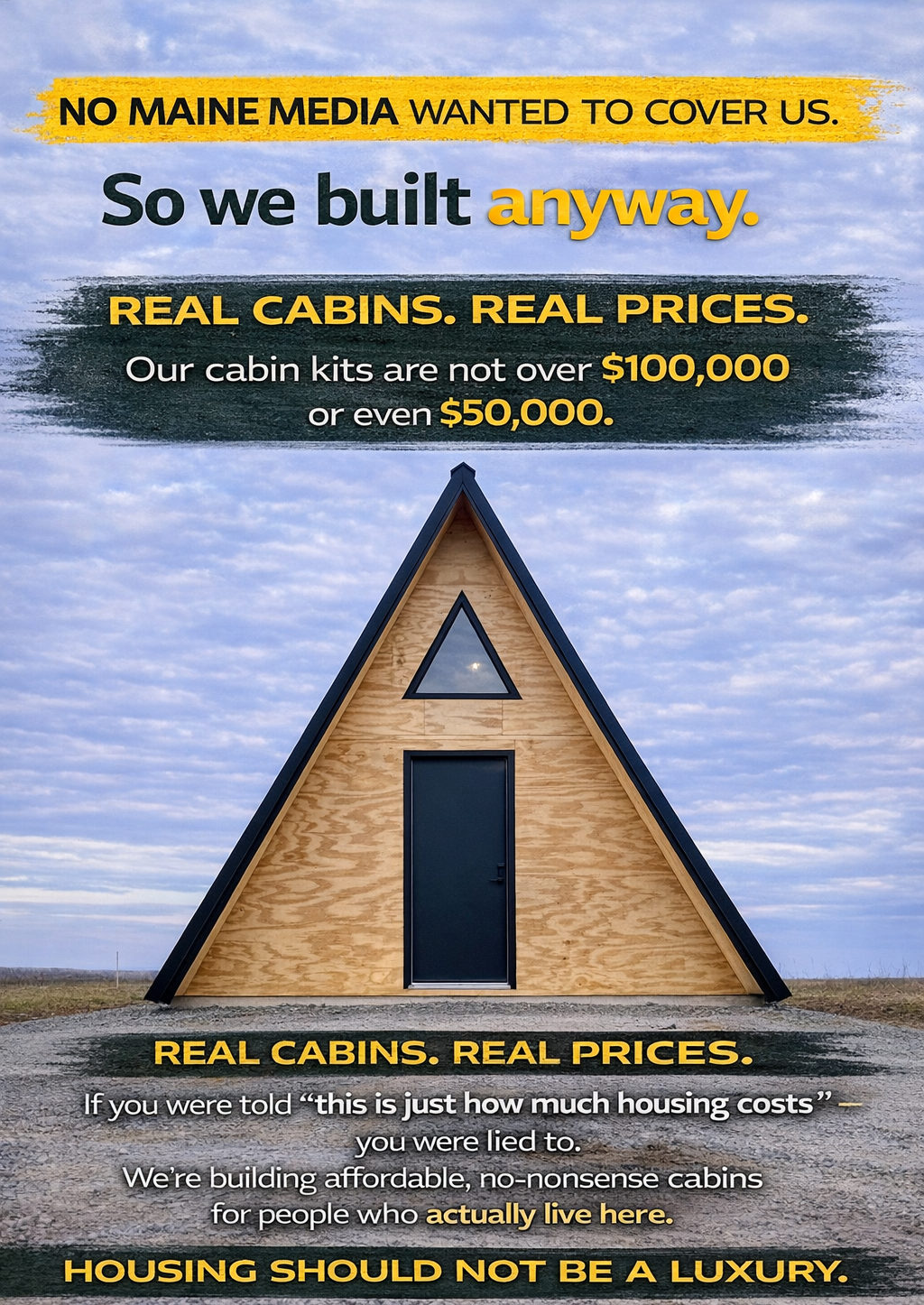
In a state that prides itself on independence, craftsmanship, and self-reliance, the absence of certain voices in the housing conversation raises a larger question: who gets amplified, and who quietly builds without recognition?
Anderson North LLC is one of those companies building quietly—and intentionally—outside the spotlight.
“I don’t think the silence is accidental,” says Ashley Anderson, founder of Anderson North LLC. “Maine has a long-standing system where opportunity often flows through established networks—developers, investors, towns, and long-standing relationships. If what you’re building threatens that ecosystem or disrupts how money normally moves, it’s easier to look away than to engage.”
Rather than conforming to existing development models, Anderson North was created to operate independently of them.
“I didn’t build Anderson North to fit into a system that already decided who gets to succeed,” Anderson explains. “I built it to solve a problem people are actually living with.”
Challenging the $100,000 “Tiny Home” Narrative
Across Maine and New England, the tiny-home industry has grown rapidly—but at a cost many residents cannot afford. Tiny homes on wheels routinely exceed $100,000 and require specialized financing, while being legally classified more like vehicles than permanent housing.
“People are told they need to take out massive loans for something that won’t even appreciate in value,” Anderson says. “A lot of these homes are marketed as freedom, but functionally they’re depreciating assets.”
Anderson North takes a different approach—one rooted in permanence and durability.
“We build real cabins,” Anderson says plainly. “They’re designed to stay. They can go on skids, deck blocks, or foundations. They’re not novelty units.”
The company’s construction philosophy draws inspiration from traditional craftsmanship rather than luxury trends.
“I often compare our approach to the Amish,” Anderson adds. “Simple, durable, no wasted materials, no unnecessary extras. Strength matters more than aesthetics. Longevity matters more than hype.”
What Anderson North Actually Sells
At its core, Anderson North sells pre-cut, modular cabin kits—a detail Anderson is intentional about clarifying.
“These aren’t finished homes and they’re not trailers,” Anderson says. “They’re precision-cut structural kits that people can assemble themselves. We give customers a solid, high-quality shell and the freedom to finish it on their own timeline.”
This model dramatically lowers costs while returning control to the buyer.
“It removes gatekeeping,” Anderson explains. “You don’t need permission, a developer, or a six-figure mortgage to start building something stable.”
Who These Cabins Are For
Anderson North’s kits are designed for landowners, people priced out of traditional housing, renters seeking permanence, and individuals interested in off-grid or rural living.
“Maine has always had a culture of self-building,” Anderson says. “People have been buying sheds and transforming them into livable spaces forever. That practicality is part of why rural Maine has stayed resilient.”
Rather than reinventing that tradition, Anderson North formalizes it.
“We’re just doing it better—better design, better materials, and better structural integrity,” Anderson adds.
“You Were Lied To”
One of Anderson North’s most pointed statements has resonated widely: If you were told this is just how much housing costs, you were lied to.
“That line matters because people internalize exploitation as normal,” Anderson explains. “Housing didn’t suddenly become expensive—it became financialized. Once that happened, affordable middle-ground options disappeared.”
Anderson North exists to challenge that narrative.
“I’m not saying housing should be cheap,” Anderson says. “I’m saying it shouldn’t be predatory.”
Building Beyond Maine
While rooted in Maine, Anderson North is expanding throughout Maine, New Hampshire, Vermont, Massachusetts, and surrounding New England regions, focusing on rural and semi-rural areas where people want permanence without debt.
“We’re not competing with luxury developers,” Anderson says. “We’re offering an alternative they don’t.”
As for media attention—or the lack of it—Anderson remains focused.
“Coverage doesn’t create value,” Anderson says. “People do. And we’ll keep building regardless.”
Housing should not be a luxury.
